The AI and ML hype fueled by ChatGPT at the end of 2022 and beginning of 2023, had an impact on CAE as well. The discussion on whether ‘AI/robots are going to take over my job’ did not skip the engineering community.
But after the initial storm passed, we saw the first use-cases where Machine Learning could actually help engineers running faster simulations. Koen Bezemer, technical consultant ML at In Summa says “Incorporation of ML techniques in Hexagon’s solvers” – like for example in Marc for non-linear analysis – is one of the standout technological advancements of 2023. Other experts agreed, saying there had indeed been more integration with AI/ML and also better support for it.
Keith Perrin, Director Design and Engineering at Hexagon Manufacturing Intelligence, is one who shares Koen’s opinion: “Over the last year, I’ve seen more and more focus on mixing up AI/ML “simulated” results with “actual” results, to simply get “the best” results, for more iterations, faster than ever before. Accompanying this I think we’re really starting to see how this can be enabled via cloud services, to bring that data together.”
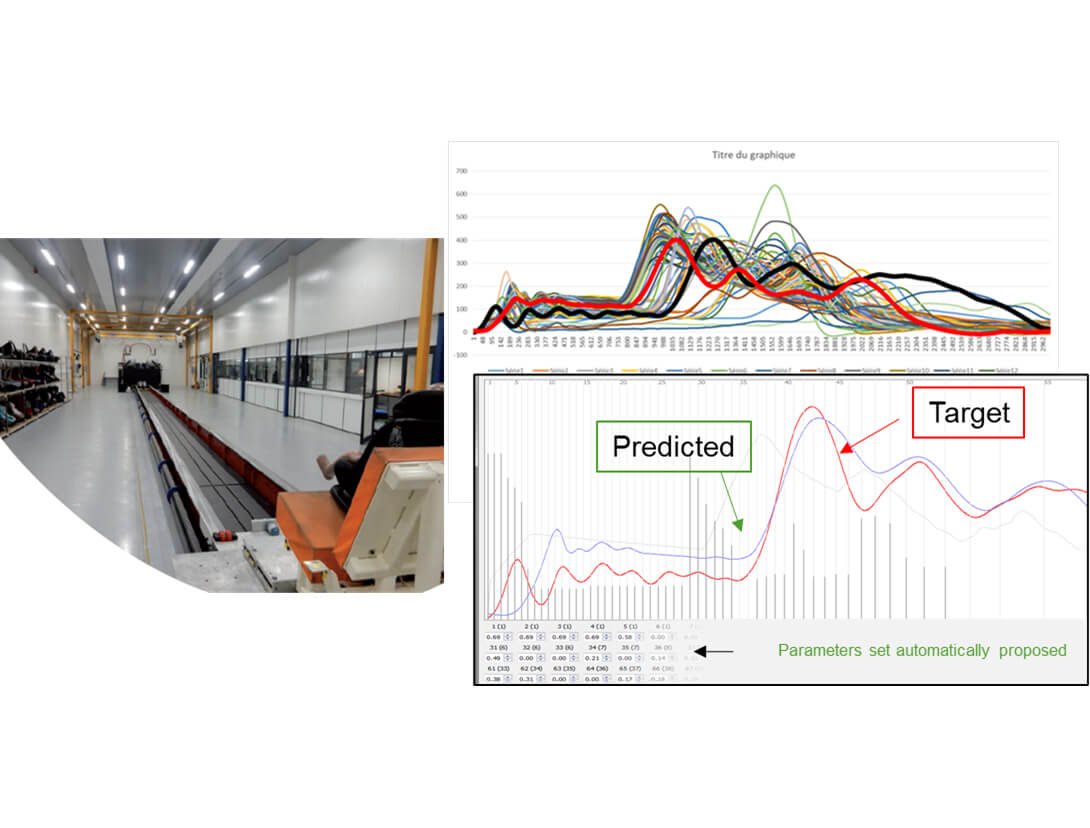
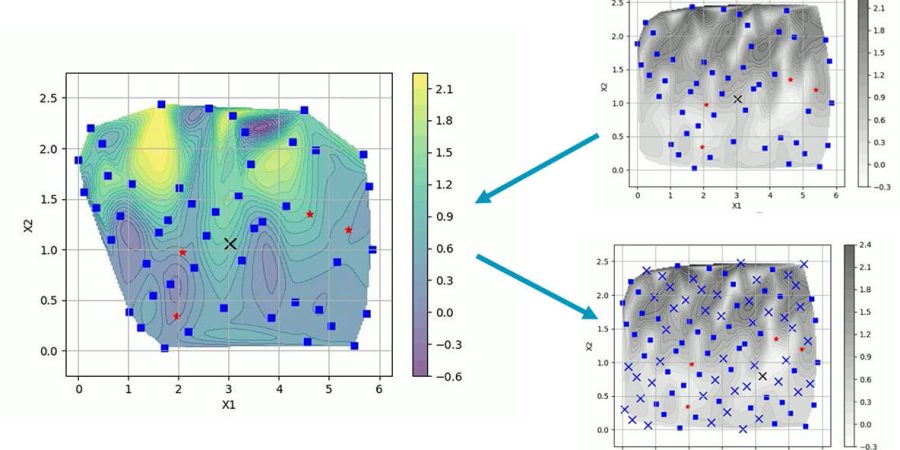
And the proof is in the pudding. Koen worked on various projects and cases this year, to name but a few: Image prediciton/classification on welding precision. Design optimization with Marc/Mentat. Understanding our parameter space and plotting our design space curves with Marc/Mentat and Odyssee Explore. Using data to predict whether deviations are acceptable throughout a production process, where ML is a tool for quality assessment. Etc. etc. The actual possibilities are taking shape and show potential for many more.
For Koen, the actual implementation of ML at customers is also his personal highlight of the year. “Applying new techniques for customers, and actually fulfilling the hypothetical scenarios make it worth it”. No wonder for 2024 his hope is for many more “cool projects with our solvers :)”.